
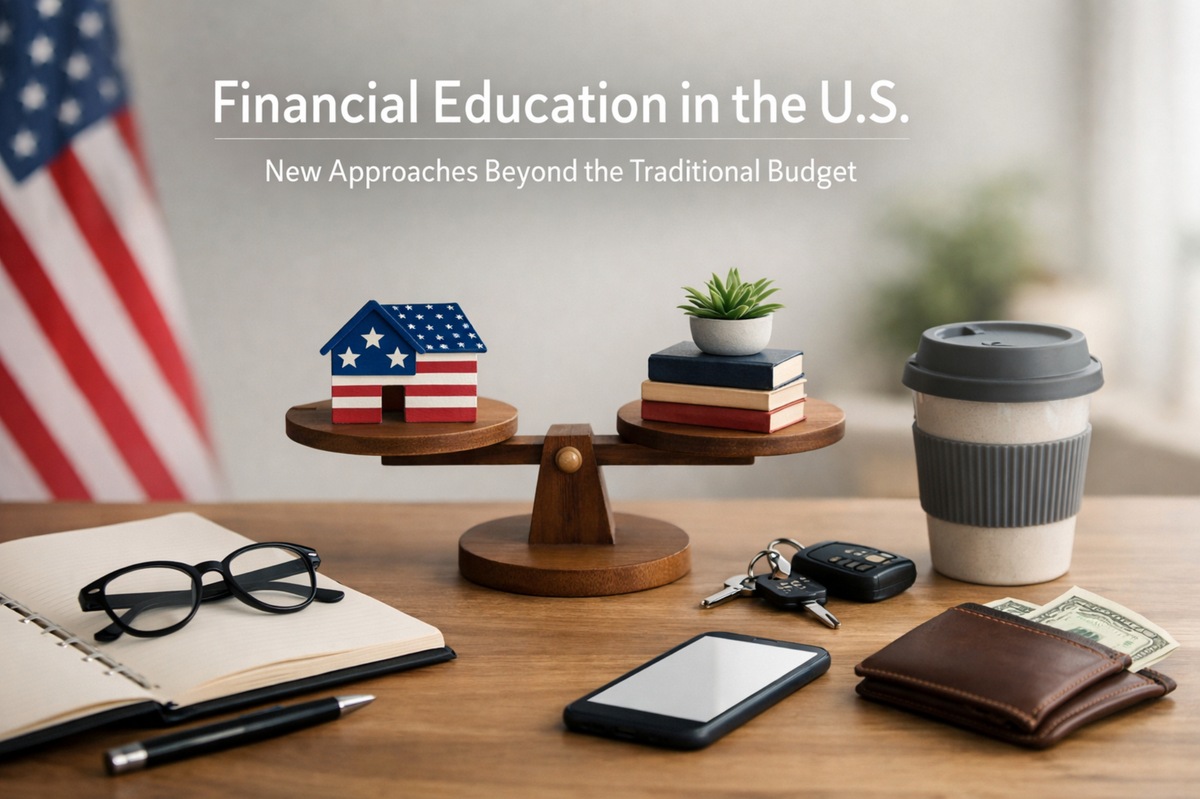
Financial education has long relied on traditional budgeting methods. While these strategies are essential, a modernized approach is gaining traction in the United States, reflecting a deeper understanding of the complexities surrounding personal finances.
By incorporating innovative strategies, educators are better equipping individuals to navigate today’s financial landscape, going beyond traditional budgeting techniques to emphasize behavioral insights, digital tools, and real-world simulations, which help learners develop practical skills and the confidence needed to make informed financial decisions in an increasingly complex economy.
Reimagining financial literacy beyond the basics
Historically, financial literacy programs have focused on basic concepts such as creating a budget and understanding loans. However, recent shifts emphasize a broader, more nuanced approach to personal economics. Recognizing that successful financial management hinges on more than just balancing a checkbook, educators are introducing topics like behavioral economics and financial psychology.
This shift in focus encourages students to think critically about their economic behavior, instilling a sense of confidence and personal responsibility. By relating financial education to real-life scenarios, learners receive a more comprehensive education that prepares them for the unpredictable nature of today’s economy. The goal is to create a generation not just proficient in numbers but also adept at making informed financial decisions.
Integrating technology for enhanced learning
Incorporating technology into financial education has been a game-changer. Digital platforms and apps are now essential tools, providing interactive and personalized learning experiences. They offer simulations and virtual exercises that mimic real-world financial decisions, allowing learners to practice risk assessment and management without real-world consequences.
Furthermore, technology facilitates access to a wealth of resources, enabling individuals to stay informed about the latest trends and strategies in personal economics. Through online courses, webinars, and podcasts, learners can continuously expand their knowledge base. This technological integration not only enhances engagement but also democratizes financial education, making it accessible to a broader audience.
Building financial resilience through community and conclusion
Beyond individual learning, community engagement plays a crucial role in financial resilience. Peer groups and community workshops offer collaborative environments where individuals can share experiences and learn from one another. These settings foster a supportive network that encourages continuous learning and financial acumen.
The new approaches to financial education in the U.S. aim to cultivate a well-rounded, proactive mindset among learners. By moving beyond traditional budgeting methods and embracing a more dynamic, inclusive curriculum, educators equip individuals to face financial challenges with confidence and savvy. These innovative strategies not only enhance individual lives but also contribute to creating a financially literate society.
👉 Also read: Financial Planning in Dollars: Protecting Wealth in Volatile Cycles